The Future Is Already Here, Artificial Intelligence is Reshaping Life On Earth: 101 Examples

Posted On // Leave a Comment

Artificial Intelligence (AI) will have more influence on the lives and livelihoods of young people over the next 20 years than any other factor.

This month I’ve been tracking news headlines to get a sense for how widespread AI applications have become. With a couple news alerts and searches I spotted 101 current applications — no SciFi here, these are tools people are using today. And these aren’t just clever algorithms — they are getting better and smarter the more data they interact with.


Life & Media


1. Mapping apps and satellite view (Google Earth)
2. Speech recognition (TechCrunch)
3. Dating apps (Vancouver Sun)
4. Language translation (Silicon Valley Business Journal)
5. Image recognition (Fei-Fei Li on TED)
6. AI composition and music recommendations (Newsweek)
7. Make reservations at a restaurant. (Techcrunch)
8. Filters content and make recommendations (Hubspot podcast)
9. Write articles (Recode)
10. Optimize website-building (TechCrunch)
11. Manages prayer requests (Deseret News)
12. Track and store the movements of automobiles, trains, planes and mobile phones (IBM)
13. Track real-time sentiments of billions of people through social media (IBM)
14. Beat the best humans in chess and Go (CCTV)
15. Coaching social-emotional relationships (Phys)

Safety & security


16. Security-driven AI systems can easily detect and identify bad behaviors from good behaviors. (Economic Times)
17. Quickly find security vulnerabilities (Defense One)
18. Criminal justice system is increasingly using algorithms to predict a defendant’s future criminality (Propublica)
19. Anomaly detection using machine vision (IBM)
20. Predictive models for crime (IBM)
21. Autonomous aerial and undersea warfighting (Nextgov)
22. Guide cruise missiles (Express)

Industry & Agriculture


23. Optimize crop yield (Amr Awadallah in Forbes)
24. LettuceBot reduces chemical use by 90% (Wired)
25. Driverless tractors (Business Wire)
26. Manufacturers predict which machines will breakdown (Amr Awadallah in Forbes)
27. Smart robots for repetitive jobs from apple picking and sneaker maker, (Techcrunch)
28. Robots develop and share new skills (MIT)

Transportation


29. Driverless cars (Nature) coming to Pittsburgh this fall (Wired)
30. Driverless trucks (TechCrunch)
31. Managing drone traffic (Yahoo)
32. Making bus routes smarter (Shanghai Daily)
33. Improve the efficiency of public transportation systems (IBM)
34. Oil exploration efficiency (Oil Price)

Environment


35. Prediction and management of pollutants and carbon footprints. (IBM)
36. Make data centers, power plants, and energy grids more efficient (Money)

Medicine & Health


37. Digitized health records and all medical knowledge to improve diagnosis (IBM)
38. Performing cohort analysis, identifying micro-segments of similar patients, evaluating standard-of-care practices and available treatment options, ranking by relevance, risk and preference, and ultimately recommending the most effective treatments for their patients (IBM)
39. Power precision medicine (NIH)
40. Reduction of medical errors (H&HN)
41. Study the genetics of Autism (SAC)
42. Analyze genomic sequences to develop therapies (Amr Awadallah in Forbes)
43. Read x-rays better than a radiologist (nanalyze)
44. Genomic editing — which may be the most important (and scariest) item on the list (Time)
45. Use social media to diagnosis depression and mental illness (Tech Times)

Organizational Management


46. Speeding and improving Identity verification and background checking (PE Hub)
47. Monitor employee satisfaction and predict staff turnover (HuffPost)
48. Sorting through stacks of résumés from job seekers. (Propublica)
49. Replace handcrafted rule-based systems (TechRepublic)
50. Smart virtual assistants (Slate)
51. Enterprise tech companies provide deep learning as a service — AI on demand (TweakTown)
52. Humans and robots will increasingly collaborate on problem solving (Quartz)
53. Automated floor cleaning (Slate)
Art & Architecture
54. Organic algorithms in architecture (Greg Lynn on TED)
55. Virtual reality art (Wired)
56. Synthesized music (Newsweek)
Social Services & Infrastructure
57. Timely and relevant answers to citizens (IBM)
58. Predict the needs of individuals and population groups, and develop plans for efficient deployment of resources. (IBM)
59. Prediction of demand, supply, and use of infrastructure (IBM)
60. Mobile phone network services (RCRwireless)
61. Analysis of lead contamination in Flint water (Talking Machines)
62. improve building and city design (Property Report)
63. Poverty map of Africa to improve services delivery (Yahoo)

Finance & Banking


64. Fraud detection (Business Insider)
65. Scan news, spot trends and adjust portfolios (Hubspot podcast)
66. Determine credit scores and qualify applicants (Propublica)
67. Find the best insurance coverage at the right cost (IBM)
68. Deliver personalized service with reduce error rates (Finextra)
69. Handle 30k banking customer services transaction/month (American Banker)
70. Answer 100M financial questions involving complex data (Fast Company)
71. Auto-adjudication of insurance claims (Fast Company)
72. Tax preparation (CFO)

Marketing & Customer Service


73. Power chatbot customer service (CB Insights)
74. Product recommendations (Digital Marketing Blog)
75. Manage White House comments (Techcrunch)
76. Chatbot lawyer contests parking tickets (Guardian)
77. Robot inventory checker (NY Times)
78. Recognise customer behavior and provide predictive customer service (Brand Equity)
79. Predict eBay sales (HeatST)
80. Improve sales funnel conversion (Digital Marketing Blog)

Entertainment


81. Fantasy football picks (Fake Teams)
82. Writing screenplays (Entertainment)

Education


83. Recommend next best learning experience (Forbes)
84. Personalized learning programs (IBM)
85. Intelligent tutoring (Forbes)
86. Provides six trait writing feedback (Hubspot podcast)
87. Digitized the world’s literature enabling search/analysis (IBM)
88. Embedded adaptive assessments promotes competency-based learning (Google’s Jonathan Rochelle in Business Insider)
89. Improve career education (Google’s Jonathan Rochelle in Business Insider)
90. AI is boosting HigherEd persistence with text nudges (Rose Luckin in Times HigherEd)
91. Process intelligence tools identify and visualize opportunities (MIT)
92. Matching teachers and schools (Getting Smart)
93. Bus scheduling (Getting Smart)

Smart Home


94. Smart home control systems (Fortune)
Check out these smart home startups. A lot of these use AI behind the scene to get smarter over time.

Courtesy Tom Van Der Ark

[Read more]

Unexpected Big Risk Meets Unexpected Big Data

Posted On // Leave a Comment

Nassim Nicholas Taleb’s popular black swan theory was named after the shock Europeans felt when they discovered black swans in Australia, despite empirical evidence and their firm belief that all swans were white. He reflected that the experience illustrated “a severe limitation to our learning from observations or experience and the fragility of our knowledge.” In short: The element of surprise and power of the unknown can affect perceptions, decisions and — of course — portfolios.

The Black Swan


In this age of volatility, the possibility of black swan events has seemingly become a constant concern, whether they take the shape of an election, natural disaster or regional conflict. Even when we feel confident as investors that the events are themselves predictable, the element of surprise can test what we think we know and leave us exposed to the downside. The U.K.’s public referendum in favor of leaving the European Union took many by surprise, temporarily rattling financial markets around the world, creating political change and economic uncertainty for the U.K. and triggering a host of issues that will take years to resolve.

We can safely assume that future events will continue to jolt global markets. But when even the best of human forecasters struggle to predict with accuracy the outcomes of these events, how can pension plans, for example, effectively make decisions to better weather the volatility that follows?
If surprise events are the question, surprise data may be the answer — as long as we know where to look for them. Emerging technologies can help institutional investors interpret vast amounts of structured and unstructured data to connect the dots between the most unexpected places and events.
Here are a few ways investors can use surprising sources of information to enhance portfolio transparency and identify risk exposure ahead of potential black swan events:

Media Outliers.


In his 2000 book The Tipping Point, Malcolm Gladwell explores diffusion theory, the spread of ideas after a crescendo event. He writes that “the tipping point is that magic moment when an idea, trend, or social behavior crosses a threshold, tips, and spreads like wildfire,” but he explains that these moments are dependent on “connectors,” “mavens” and “salesmen,” all types of people who help translate ideas and information for a mass audience.

Mavens, in particular, are “information brokers, sharing and trading what they know.” In the financial marketplace, the media largely play this role. The 24-hour news cycle, although sometimes overwhelming, can itself help signal the beginning of a tipping point. Using big data to track media sentiment, volume, tone and correlation can help institutional investors understand the diffusion of ideas and outliers that can serve as clues for unexpected risk.

[Read more]

Machine Learning Is At The Very Peak Of Its Hype Cycle

Posted On // Leave a Comment
Machine Learning will be Mainstream … Soon.
Machine learning has earned a prestigious honor in its march to technological relevance …
The peak of its hype cycle.
According to the 2016 Gartner Hype Cycle for Emerging Technologies, machine learning is at the very “peak of inflated expectations,” the highest point in the S-curve that Gartner awards technologies in its Hype Cycle reports. 2016 has been full of machine learning and artificial intelligence news as companies like Google, Facebook, Microsoft, Intel and IBM announce and release new tools to take advantage of neural networks that can train computers.
Many machine learning advocates may feel betrayed to think that machine learning is at the peak of its hype cycle, thinking that analysts like Gartner believe machine learning to be all fluff and no substance. But that is not the case. Many emerging technologies never actually make it to the peak of the hype cycle, fizzling out long before they can make a true impact.
In reality, technologies that make it to the peak of the hype cycle are almost ready for universal deployment. Much of the research and development of the technology has already been done and the real implementation (and all the headaches that go with it) is about to begin. That’s why technologies fall from the peak of inflated expectations to “the trough of disillusionment” as developers go through the painful process of tightening the nuts and bolts to make the technology easier to use for the average person or enterprise.
Machine learning will be extremely valuable to enterprises over the next decade thanks to radical computer power and endless data, which will allow companies to adapt quickly to new situations, Gartner said. Immersive experiences such as virtual and augmented reality have already begun a move towards the mainstream, with both consumers and enterprises adopting them within the next five to 10 years.

The Hype Cycle Offers A Glimpse Of The Future

Companies that invest in immersive experiences, smart machines and ecosystem-enabling platforms are likely to have a significant advantage over their rivals in the very near future.
According to Gartner’s Hype Cycle, these are the three key technology trends that enterprises and developers need to succeed (or at least be aware of) in the digital economy. The report is the longest running of Gartner’s annual hype cycles and is considered to be an accurate barometer as to where technology is heading over the next decade or so.
At the same time, the so-called platform revolution will shift the emphasis from a technical infrastructure to a dynamic ecosystem that relies on both internal and external algorithms to drive value, said the report. Companies need to redefine theirbusiness strategies to become more dynamic, especially as emerging technologies are redefining how established platforms are used.
“These trends illustrate that the more organizations are able to make technology an integral part of their employees’, partners’ and customers’ experience, the more they will be able to connect their ecosystems to platforms in new and dynamic ways,” said Gartner research director Mike J. Walker, in a press release. “Also, as smart machine technologies continue to evolve, they will become part of the human experience and the digital business ecosystem.”
All three of the identified trends have been part of the hype cycle for quite some time, so it is not really a surprise to see them featured so prominently in the latest emerging technologies report.
Gartner’s reports concentrate on five phases of development for a given technology, all of which match expectation with time to mainstream adoption.
gartner_hype_cycle_2016
Source: Gartner, Hype Cycle for Emerging Technologies, via press release.
The phases are a must-know reference point for companies that are engaged in strategic planning. Some technologies are obviously further developed than others, but all are—in theory—capable of giving companies a competitive advantage, said Gartner.
The phases are as follows:
  • The Innovation Trigger, where the technology moves from the realms of science fiction to a potential reality.
  • Peak of Inflated Expectations, the period when the technology will be the best thing since sliced bread … one day.
  • Trough of Disillusionment, which turns excitement into the realization that the innovation is still a long way off.
  • Slope of Enlightenment, or in other words when the innovation is mature enough to provide real-world business uses.
  • Plateau of Productivity, when the technology is actually mature and being used by companies or industries on a regular basis.
For example, machine learning currently sits at the top of the Peak of Inflated Expectations, with mainstream adoption expected within two to five years. Advances in neural networks and the ubiquitous availability of big data have made machine learning one of the major concepts in IT, so much so that it has the capacity to transform companies, the report said.
And then there is virtual and augmented reality.
The technology has been around for decades but has often veered between the Peak of Inflated Expectations and the Trough of Disillusionment. Over the last year, the landscape has changed dramatically, thanks mainly to the fact that virtual realityexperiences and hardware have started to flow into the consumer world.
The latest hype cycle shows that virtual reality is now firmly ensconced in the Slope of Enlightenment and should reach mainstream adoption in five to 10 years. Augmented reality—which many people consider to be a more viable option—is slowly traversing the trough, with the expectation that this will happen over a similar timeframe.
virtual_reality

Why Technology Needs To Be Constantly Tracked

Other sci-fi technologies from the 2015 version of the hype cycle that were on the upward slope—smart dust, human augmentation, brain-computer interface—are at least ten years from maturity, the report said. Autonomous vehicles, which occupied machine learning’s position at the Peak of Inflated Expectations a year ago, have started the slow decline into disillusionment … irrespective of the current bullish attitude of the auto industry.
“To thrive in the digital economy, enterprise architects must continue to work with their CIOs and business leaders to proactively discover emerging technologies that will enable transformational business models for competitive advantage, maximize value through reduction of operating costs, and overcome legal and regulatory hurdles,” said Walker. “This Hype Cycle provides a high-level view of important emerging trends that organizations must track, as well as the specific technologies that must be monitored.”
Courtesy Of ArcApplause
Lead image: “Machine Learning” by Flickr user Thomas Hawk, Creative Commons.
Stay in the know! Subscribe to ARC and keep up-to-date with a daily or weekly subscription.
[Read more]

The Awesome Potential Of Big Data & Predictive Analytics In Africa

Posted On // Leave a Comment
                                            Africa At A Crossroads, Innovate Or Die.
What is Big Data?
Every day, we create 2.5 quintillion bytes of data — so much that 90% of the data in the world today has been created in the last two years alone. This data comes from everywhere: sensors used to gather climate information, posts to social media sites, digital pictures and videos, purchase transaction records, and cell phone GPS signals to name a few. This data is big data.
Find Insights & Patterns
Big data is more than simply a matter of size; it is an opportunity to find insights in new and emerging data types and content, in order to make your business more agile, and to answer questions that were previously considered beyond your reach. Until now, there was no practical way to harvest this opportunity. Today platforms for Big Data use state of the art technologies including patented advanced analytics to open the door to a world of possibilities.

Gap is Closing 


Africa may trail the US and Europe in terms of technology, but the gap is closing fast. It seems our economic woes have inspired us to harness certain technologies with more zeal and in more innovative ways. Yup, when necessity said she mothered invention,she wasn’t lying.
For example, mobile banking has enabled the small business merchant do business in ways they could only dream of during the days of cutthroat loans and complex credit facilities. Another example is in the area of backup electricity generation, which I’ll wager we’re ahead of the pack. Who needs nuclear, right? Yes, it’s a small victory but if power fails at our own Super bowl, the ‘inverters’ will keep the lights on while we switch on the ‘big gen’.

Big Data Spans Three Dimensions: Volume, Velocity and Variety.


Volume: Enterprises are awash with ever-growing data of all types, easily amassing terabytes—even petabytes—of information.
Velocity: Sometimes 2 minutes is too late. For time-sensitive processes such as catching fraud, big data must be used as it streams into your enterprise in order to maximize its value.
Variety: Big data is any type of data - structured and unstructured data such as text, sensor data, audio, video, click streams, log files and more. New insights are found when analyzing these data types together.

Data Analytics
Moving on, one area where technology can swiftly bridge the gap is in data analytics. Data analytics, often coupled with the term “predictive modelling”, is the rapidly growing discipline of using data gathered in the past to predict what will happen in the future. It is as crazy as it sounds, yet a science. It is how Netflix suggests interesting TV shows or how Target knew a teen girl was pregnant before her father did. .
The Economist reports Cyber security, Cloud analytics and Data analytics – which all have a symbiotic relationship – as three top tech trends for 2015. These are interesting times indeed. Due to increased investments in the three areas, barriers to accessing big-data and analytics have fallen drastically. Literally anyone with an internet connection can have a supercomputer running a thousand miles away, doing their bidding, round the clock. 
Smart Cities
Many African IT companies provide their services this way and it’s smart. One can now tap into the cloud and big-data without factoring power cuts, black-market diesel or expensive internet plans into their expenditure.Predictive modelling techniques are employed in farming, manufacturing, finance, warfare and oil exploration, to name a few and there is plenty of untapped potential for this in Africa.
Artists Smart City Rendition
Farmers can be encouraged to subscribe to analytics – or precision agriculture. IBM’s research into precision agriculture accurately highlights the importance of making smarter decisions regarding planting, fertilizing and harvesting crops; pointing out that 90% of crop losses are due to bad weather. While it might not be as easy as taking your clothes off the line before the rains, knowing weather patterns helps farmers make decisions before a single seed hits the dirt.
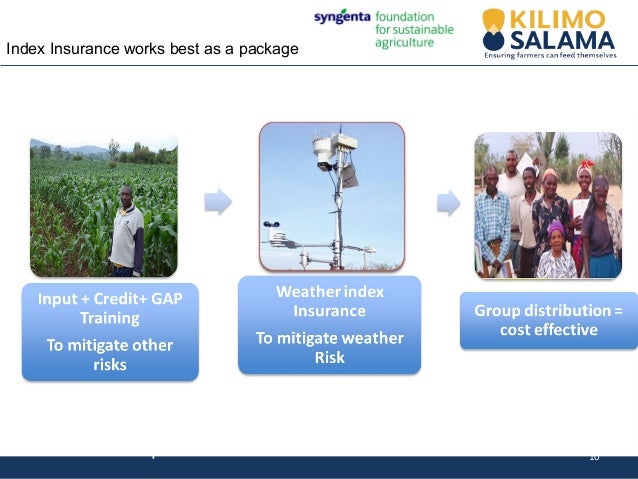
Knowing in advance the risk created by adverse weather, farmers are better able to access insurance and in turn, loans from the bank. This is already being done in Kenya with the Kilimo Salama crop insurance scheme. That’s a whole ecosystem revived.
Kilimo Salama Infographic
Exciting Possibilities.
Retailers such as Konga or Jumia could gain valuable insights into the lives of thousands of customers at their doorstep. Proper customer segmentation through analytics can easily provide a platform to tackle this. Marketing would be more accurate as packaging and offers would be tailored to individual tastes and peculiarities.
Big data and analytics presents the African continent with lots of questions. And exciting possibilities. Can predictive models discern between clean and fraudulent mobile money transactions? With that kind of accuracy, we could see an open market and an upsurge in mobile money services. Which would lead to a more secure, robust industry.
Big-Data and Analytics
The 4 Vs Of Big Data IBM /Image Source 
Big-Data and Analytics may not be the magic wand to these problems but an awareness of the benefits of analytics and technical expertise will create tangible value for businesses, industry and the local economy.
The time is now for the African continent to invest in Big Data since the infrastructure required is already present and is provided either as Infrastructure as a Service, IaaS or Software as a Service, SaaS. To gain access to the free tools available, the only barrier to entry is an internet connection.
 And an additional incentive which can speed up the uptake of Big Data, AI and associated technologies is tha fact that there is currently plenty of unused broadband bandwidth, dotting the coasts of Africa.
Courtesy of TechCabal , Additional Reporting By Marcel Masaga @magesa
[Read more]

The Unfolding Value of Big Data and the Internet of Things

Posted On // Leave a Comment


The Internet of Things or IoT – digitizing information about people, things, and the environment and transmitting it over networks – provides many business benefits, from cutting costs to generating new revenue streams. Our own experience with the IoT,  as a company that both leverages it in our operations and incorporates it into our products, has highlighted its impact on manufacturing operations, increased productivity, and employee motivation. But we have also seen first-hand how the IoT can improve workers’ safety and, more generally, the quality of people’s lives.


Indeed, the IoT, in ways that only now are emerging, will offer not only such quantifiable benefits as reduced time and cost but also a wide array of qualitative improvements. The collection of real-time data enabled by the IoT, combined with useful analysis, is poised to change the very nature of the way we do business – and the way we live our lives.

The Internet of Things improves operations

The IoT makes it possible to increase manufacturing efficiency and significantly reduce production costs while increasing workers’ motivation.

In one of Fujitsu’s plants, we found that the IoT increases the efficiency of manufacturing a product by enabling predictive maintenance for production equipment. Sensors indicate when maintenance is required before the machine fails and causes a problem in production. Over time, the ongoing analysis of the IoT data allows us to continuously improve the accuracy of machine-failure prediction. In addition, the IoT helps in highlighting obstacles to efficiency and pointing to improvements that can be made on-the-fly.

A side benefit of using the IoT to make real-time improvements to a production line is increasing the motivation of workers on the factory floor. Putting them in control empowers them and makes them feel more valuable as they get involved in understanding the data and acting on it.

As different types of data come into play during operations, they all have to be understood not just on their own but also in the ways they correlate and affect each other. It is necessary to understand the raw data from sensors within the context of the movement of different elements of the production line. That has to take into account multiple streams of data involving both machines and human operators.  Once the data are put together, they need to be analyzed to identify causal relationships.

The IoT makes all that possible, linking up all the streams of data and showing their relationship to each other through data visualization. For example, when multiple models are produced on the same production line, the settings on the line have to be adjusted multiple times during the day. The IoT links different streams of data—from workers, from the equipment, from the manufacturing management system—to visually display what settings have been changed and in what specific context, providing a comprehensive picture of the entire process and the bottlenecks that slow it down.


Solving the problem of bottlenecks is crucial in large-volume production with very strict schedules. It poses a particular challenge when coupled with quality control that requires removing components that indicate an abnormality, fixing them, and getting them back into the production process.

At the Fujitsu Shimane PC factory, defective components have to be removed from the main floor and taken to the repair area. The challenge is that within the repair area there are products at different stages, from initial assembly to final testing.  Without knowing exactly when the repaired component would be completed, it is difficult to accurately assess delivery time. Sometimes delivery of an order can be delayed or a special delivery truck must be used just to ship the part that wasn’t ready at the time the rest of the order went out.

Knowing that this was making us less efficient, we wanted to better understand the progress of products in the repair area. Pinpointing the position of a product in the repair area would reveal where it is in the process. By adding a sensor to each component and a barcode reader, we were able to see where repaired products were in real time. This told us not only how many components were awaiting repair but at what point in the process each one was, so that we could predict how much time would be needed to complete the repair of each one of them.

As a result of using the IoT in this manner, we realized two very positive benefits. One was a 30% reduction in delivery costs. The other was a gain in awareness of the IoT on the factory floor, encouraging workers to make proposals for additional improvements using the real-time monitoring enabled by the IoT. That holds the promise for even better results in the future.

The Internet of Things improves people’s lives


The IoT can make people’s lives better and safer. For example, approximately 75,000 trucks travel the roads of Japan and they could provide very valuable data. At one truck fleet operator where we implemented an IoT solution, we discovered that the data collected on the road could significantly improve fuel economy. Another IoT-based solution tests the impact of changing road signs on drivers’ behavior. This has led to new insights on how to improve the safety and driving experience for all drivers.

Another example of how the IoT improves safety is its use in construction sites, with sensors that measure a worker’s vital signs, speed, and acceleration of movement. When one of the sensors detects any abnormality, it sends an alert. That can save lives, as people often fail to notice danger signs. A clear advantage of using the IoT in this case is that the continuous collection of data establishes a baseline, which in turn allows the system to identify abnormal behavior and help prevent heat strokes. In addition, it allows the construction-site operator to prevent workers from entering dangerous areas and stop their work if the amount of activity rises above a certain level. The reduction in construction-site accidents helps the operator win additional construction projects.

Another area in which the IoT can tremendously improve quality of life is with the elderly, specifically to help them move around safely. For example, Fujitsu has added IoT components to RT. WORK’s Assist Cart, to provide a complete solution for elderly people who cannot walk unaided.  The Assist Cart has various embedded sensors that track the walker’s movements, allowing the cart to respond quickly to what the person needs for a safer walk.

For example, when the person approaches a downward slope, the Assist Cart will automatically slow down or brake to help the person maintain control. Its sensors are not limited to environmental factors; they can assess specific health conditions, as well. For example, if the person has trouble moving one leg, the Assist Cart can adjust the distance for each step to accommodate the unevenness of the individual’s walk. In the case of someone undergoing rehabilitation therapy, that kind of adjustment ensures faster recovery. In fact, the Assist Cart’s responsiveness, based on real-time data, makes all the difference between just getting general support from a walking aid and getting customized assist—exactly what the person needs when he or she needs it.


This use of the IoT to personalize and improve an experience for individuals is what we can anticipate seeing more of in future. Personalization will help in very different situations, from allowing more freedom of movement for the elderly to providing the information that a shopper needs at a certain point in time.

The key for a good shopping experience is one in which the customer is made aware of the available options but is not too overwhelmed or distracted. When the IoT is applied to a retail environment, it can follow the movements of customers in the store via the signals from their mobile devices, and send them relevant targeted information at the right time.

For example, if a woman is browsing through the women’s department, it doesn’t make sense to try to divert her attention to men’s clothes. But if she gets a notification about a sale on men’s shirts while she’s having coffee, then it’s giving her information that she may consider useful if she’s thinking of which department to go to next while she’s at the store.  The IoT gives the retailer data that helps it effectively promote its merchandise while also giving the customer information that could be of benefit to her shopping needs. That’s a win-win solution.

***

As the examples in this article have illustrated, there is much value that the IoT can bring to businesses.  Not only can it facilitate business innovations such as improved processes, but it can also be the catalyst for expanding into new business areas and exploring novel activities with different partners. Most important, the IoT has already been shown to offer a range of benefits that can improve the life of millions.

By Takaaki Suga, Head of the IoT Business Division, Fujitsu
[Read more]